
Can Pilates Help with Diastasis Recti?
Quick Answer
Can Pilates fix diastasis recti? Yes, when properly modified, Pilates can significantly help heal diastasis recti by strengthening deep core muscles, improving posture, and teaching proper breathing patterns. However, it requires specialized instruction and specific exercise modifications to avoid worsening the condition.
Key Benefits for Diastasis Recti:
- Strengthens transverse abdominis (deep core muscle)
- Improves posture and spinal alignment
- Teaches proper breathing and core activation
- Reduces back pain associated with weakened core
- Safe, progressive exercise progression
Important Note: Work with instructors certified in pre/postnatal Pilates who understand diastasis recti modifications and contraindications.
If you’re dealing with diastasis recti – the separation of abdominal muscles that commonly occurs during pregnancy – you’re likely searching for safe, effective ways to heal your core and regain strength. The good news is that Pilates, when properly modified and taught by qualified instructors, can be an excellent tool for diastasis recti recovery. However, not all Pilates exercises are appropriate for this condition, making professional guidance essential for safe and effective healing.
Diastasis recti affects up to 60% of pregnant and postpartum women, yet many receive little guidance on how to safely recover. Understanding how Pilates can support your healing journey – and which modifications are necessary – empowers you to make informed decisions about your postpartum fitness and long-term core health.
Understanding Diastasis Recti
Before exploring how Pilates can help, it’s crucial to understand what diastasis recti is and why it occurs.
The Anatomy: Diastasis recti refers to the separation of the rectus abdominis muscles (the “six-pack” muscles) along the linea alba, the connective tissue that runs down the center of the abdomen. During pregnancy, hormones and the growing uterus cause this tissue to stretch and thin, allowing the muscles to separate.
Why It Happens: This separation is a normal adaptation to pregnancy, allowing space for the growing baby. However, factors like multiple pregnancies, carrying multiples, maternal age, and genetics can influence the degree of separation and recovery.
Beyond Aesthetics: While the visible “pooch” or doming of the abdomen concerns many women, diastasis recti’s impact extends beyond appearance. It can contribute to back pain, pelvic floor dysfunction, poor posture, and decreased core stability, affecting daily activities and quality of life.
The Healing Process: The connective tissue can heal and the muscles can come closer together with proper exercise and time. However, inappropriate exercises can worsen the separation, making educated exercise choices crucial.
How Pilates Supports Diastasis Recti Recovery
Pilates offers several unique advantages for diastasis recti healing when properly applied and modified.
Deep Core Activation: Traditional abdominal exercises often focus on the superficial muscles and can actually worsen diastasis recti by creating outward pressure. Pilates emphasizes activation of the transverse abdominis – the deepest core muscle that acts like a natural corset, providing the internal support needed for healing.
Breath Integration: Proper breathing is fundamental to core healing. Pilates teaches coordinated breathing patterns that support optimal core function, helping to re-establish the connection between the diaphragm, pelvic floor, and deep abdominal muscles.
Postural Restoration: Pregnancy and caring for newborns often lead to postural changes that can impede diastasis recti recovery. Pilates addresses these imbalances, promoting spinal alignment that supports optimal core function and healing.
Progressive Loading: Pilates allows for gradual progression from gentle activation exercises to more challenging movements as healing progresses. This systematic approach respects the healing process while building strength over time.
Whole-Body Integration: Rather than isolating the abdominal muscles, Pilates teaches how the core works as part of the entire body system, promoting functional movement patterns that support long-term recovery and injury prevention.
Essential Modifications for Diastasis Recti
Working with diastasis recti requires specific exercise modifications to ensure safety and promote healing.
Avoiding Contraindicated Movements: Certain exercises can worsen diastasis recti and should be avoided until significant healing has occurred. These include traditional crunches, sit-ups, front-loaded planks, and any exercise that causes visible doming or coning of the abdominal wall.
Head and Shoulder Position: Many Pilates exercises involve lifting the head and shoulders. With diastasis recti, this movement must be modified or avoided initially, as it can increase intra-abdominal pressure and potentially worsen the separation.
Rotational Modifications: Twisting movements require careful modification, as they can stress the healing connective tissue. Instructors trained in postpartum exercise understand how to modify or substitute these movements appropriately.
Support and Props: Using props like pillows, towels, or specialized support garments can help maintain proper alignment and provide external support while the internal structures heal.
Safe Pilates Exercises for Early Recovery
During the initial recovery phase, gentle exercises focus on re-establishing core connection and basic stability.
Breath Work and Gentle Activation: Learning to properly engage the deep core muscles through breath work forms the foundation of recovery. The “360-degree breath” taught in Pilates helps coordinate diaphragm, pelvic floor, and deep abdominal muscle function.
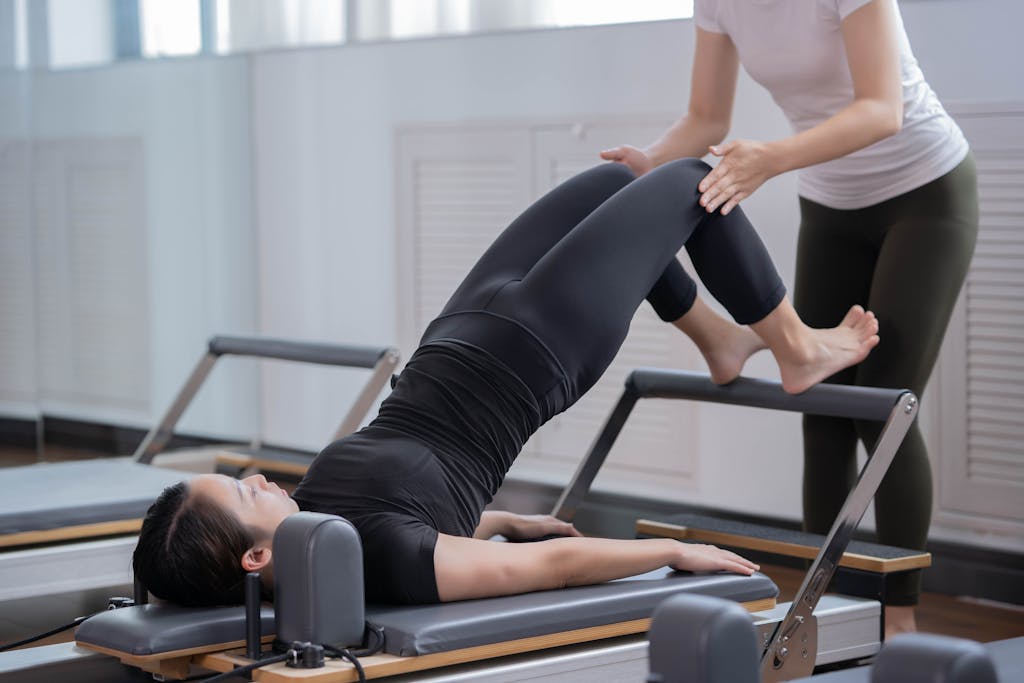
Modified Bridge Work: Bridge exercises, when performed correctly, can safely strengthen the glutes and posterior core while avoiding excessive stress on the healing abdominal muscles.
Supported Side-lying Exercises: Side-lying positions allow for core activation without the gravitational challenge of supine or prone positions, making them excellent for early recovery.
Wall-supported Exercises: Using a wall for support allows for gentle core activation and postural work while providing external stability during the healing process.
Gentle Spinal Mobility: Careful spinal movement helps maintain mobility while teaching proper movement patterns that support core function.
Progressive Exercise Strategies
As healing progresses, exercises can be gradually advanced while continuing to respect the recovery process.
Functional Movement Integration: Advancing to exercises that mimic daily activities helps bridge the gap between therapeutic exercise and real-world function. Modified squats, lunges, and carrying exercises can be introduced as appropriate.
Increased Challenge Through Position: Progressing from supported to unsupported positions, from stable to unstable surfaces, and from two-limb to single-limb activities provides graduated challenge.
Load Progression: Gradually introducing light resistance through bands, small weights, or spring resistance (on Pilates equipment) can continue strengthening as tissues heal.
Complex Movement Patterns: Advanced exercises that challenge multiple body systems simultaneously help develop the coordination and strength needed for optimal long-term function.
The Role of Specialized Instruction
Working with properly trained instructors is crucial for safe and effective diastasis recti recovery through Pilates.
Pre/Postnatal Certification: Instructors should have specialized training in pre and postnatal exercise, understanding the physiological changes of pregnancy and recovery. This education covers contraindications, appropriate modifications, and progression strategies specific to postpartum bodies. Our certified pre/postnatal specialists have extensive training in postpartum recovery and diastasis recti management.
Assessment Skills: Qualified instructors can assess diastasis recti severity and monitor progress over time. They understand when exercises should be modified, progressed, or temporarily avoided based on individual healing patterns.
Individualized Programming: Every woman’s recovery is different, influenced by factors like delivery type, number of pregnancies, and overall health. Specialized instructors can create personalized programs that respect individual needs and healing timelines.
Red Flag Recognition: Trained professionals know when to refer clients to healthcare providers for additional evaluation or treatment, ensuring that exercise complements rather than replaces necessary medical care.
Timeline Expectations and Realistic Goals
Understanding the typical recovery timeline helps set realistic expectations and maintain motivation throughout the healing process.
Immediate Postpartum (0-6 weeks): Focus should be on gentle breathing exercises and basic core re-activation. Most healthcare providers recommend waiting for medical clearance before beginning structured exercise programs.
Early Recovery (6-12 weeks): With medical clearance, gentle Pilates exercises can begin. Progress may be slow, and patience is essential as tissues continue healing from childbirth.
Intermediate Recovery (3-6 months): Many women see significant improvement during this period with consistent, appropriate exercise. The gap may continue to narrow, and functional strength typically improves markedly.
Long-term Recovery (6+ months): While some separation may remain, most women achieve functional strength and significant cosmetic improvement by this point. Some may choose additional interventions if desired outcomes haven’t been achieved.
Individual Variation: Recovery timelines vary significantly based on factors like age, number of pregnancies, genetics, consistency with exercise, and overall health status.
Complementary Strategies for Optimal Recovery
While Pilates forms an excellent foundation for diastasis recti recovery, combining it with other strategies can enhance outcomes.
Nutritional Support: Proper nutrition supports tissue healing and provides energy for exercise. Focus on adequate protein, hydration, and nutrients that support collagen synthesis and tissue repair.
Sleep and Recovery: Quality sleep is crucial for tissue healing and hormonal balance. While challenging with a new baby, prioritizing rest when possible supports the recovery process.
Stress Management: Chronic stress can impair tissue healing and affect hormonal balance. Incorporating stress-reduction techniques like meditation, gentle yoga, or counseling can support overall recovery.
Pelvic Floor Coordination: The pelvic floor and deep abdominal muscles work together as part of the core system. Addressing both areas simultaneously often yields better results than focusing on one alone.
Professional Support Network: Building a team that may include your OB/GYN, a pelvic floor physical therapist, and qualified fitness professionals ensures comprehensive care throughout recovery.
Common Myths and Misconceptions
Several myths about diastasis recti can lead to inappropriate exercise choices or unrealistic expectations.
Myth: All Abdominal Exercises Help: Many traditional “core” exercises can actually worsen diastasis recti. Movements that cause visible doming or bulging should be avoided until adequate healing has occurred.
Myth: Surgery is the Only Solution: While some severe cases may benefit from surgical intervention, many women achieve excellent functional and cosmetic results through conservative treatment including appropriate exercise.
Myth: It’s Only a Cosmetic Issue: Diastasis recti can significantly impact function, contributing to back pain, pelvic floor dysfunction, and decreased quality of life. Addressing it appropriately supports overall health and well-being.
Myth: Recovery Should Be Quick: Tissue healing takes time, and diastasis recti recovery is a gradual process. Expecting rapid changes can lead to frustration and potentially harmful exercise choices.
When to Seek Additional Help
While many women achieve excellent results with appropriate exercise, some situations warrant additional professional intervention.
Persistent Pain: Back pain, pelvic pain, or abdominal discomfort that doesn’t improve or worsens with appropriate exercise may indicate need for additional evaluation.
Functional Limitations: If daily activities remain significantly impaired despite consistent exercise, additional interventions may be beneficial.
Lack of Progress: If no improvement is seen after 3-6 months of consistent, appropriate exercise, reassessment by a healthcare provider may be warranted.
Psychological Impact: If diastasis recti significantly affects self-esteem or quality of life, counseling or support groups can be valuable additions to physical recovery strategies.
Long-term Maintenance and Prevention
Successful diastasis recti recovery extends beyond initial healing to long-term maintenance and prevention of recurrence.
Ongoing Exercise: Continuing regular exercise that emphasizes core stability and functional movement helps maintain recovery gains and supports overall health.
Movement Awareness: Learning proper body mechanics for daily activities – lifting, carrying, getting up from bed – helps prevent re-injury and maintains optimal function.
Future Pregnancy Considerations: If planning additional pregnancies, maintaining core strength and working with knowledgeable professionals can help minimize recurrence and support recovery after subsequent births.
Lifestyle Integration: Incorporating Pilates principles into daily activities helps maintain the strength, posture, and movement patterns that support long-term core health.
The Emotional Journey of Recovery
Dealing with diastasis recti involves more than physical healing – it often includes emotional and psychological components that deserve attention and support.
Body Image Adjustments: Many women struggle with changes to their appearance and physical capabilities. Recognizing these feelings as normal and seeking support when needed is important for overall well-being.
Patience and Self-Compassion: Recovery takes time, and progress may not always be linear. Practicing self-compassion and celebrating small victories supports the healing journey.
Community and Support: Connecting with other women experiencing similar challenges can provide encouragement, practical tips, and emotional support throughout recovery.
Professional Counseling: If body image concerns or postpartum mood changes significantly impact quality of life, professional counseling can be a valuable component of comprehensive care.
Making Informed Decisions About Your Recovery
Ultimately, the decision about how to approach diastasis recti recovery is personal and should be based on accurate information, realistic expectations, and individual goals and values.
Education and Research: Understanding the condition, treatment options, and realistic outcomes empowers you to make informed decisions about your care.
Professional Consultation: Working with qualified healthcare providers and fitness professionals ensures that your approach is safe, appropriate, and likely to be effective.
Personal Goals and Values: Consider what outcomes are most important to you – functional improvement, cosmetic changes, or overall health – and choose approaches that align with your priorities.
Resource Allocation: Consider the time, energy, and financial resources you can realistically commit to recovery efforts, and choose sustainable approaches that fit your lifestyle.
Your Path to Recovery
Diastasis recti recovery through Pilates is not just possible – it’s probable when approached with proper knowledge, qualified instruction, and realistic expectations. The key is understanding that this journey requires patience, consistency, and often professional guidance to navigate safely and effectively.
Remember that every woman’s recovery is unique, influenced by individual factors that may affect both timeline and outcomes. What matters most is finding an approach that supports your health, fits your lifestyle, and helps you feel strong and confident in your body.
Whether you’re newly postpartum or years past childbirth, it’s never too late to begin addressing diastasis recti. With appropriate modifications and professional guidance, Pilates can be a powerful tool in your recovery arsenal, helping you build the strong, functional core that supports all aspects of your active life.
Take the first step by consulting with healthcare providers and seeking out qualified Pilates instructors who understand the complexities of postpartum recovery. Schedule your diastasis recti assessment today to begin your journey to core healing and renewed strength Your journey to core healing and renewed strength begins with that first, informed decision to prioritize your health and well-being.